Robot Vacuum Edge Cleaning: 90-Degree Solutions
By Aisha Noor • 12th Apr
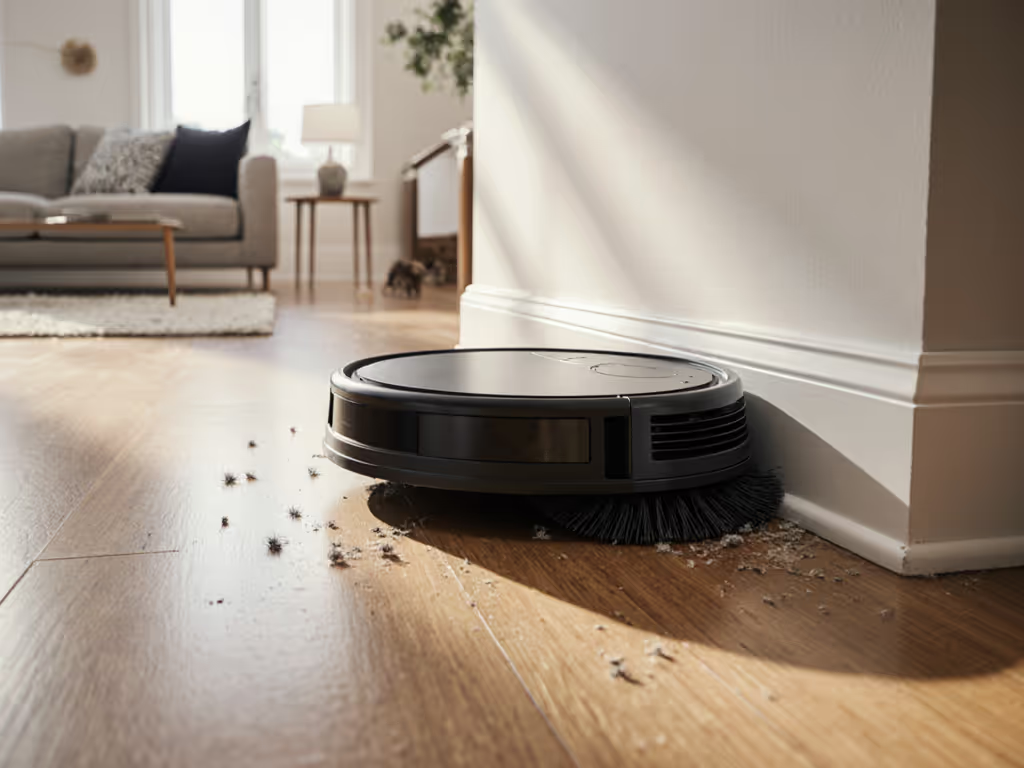
Robot vacuum cleaner systems have evolved dramatically, but one persistent frustration remains: that dirt-lined gap along baseboards where walls meet floor. The challenge isn't happenstance: it's a fundamental geometry problem. A circular robot vacuum cleaner body simply can't reach a 90-degree corner the way a human's hand can. Yet this isn't a reason to abandon hope. Modern edge cleaning technology has solved what older models couldn't: getting genuinely close to corners and extracting the debris that collects there.
The Problem: Why Standard Robots Fail at Corners
When naps and Zoom calls overlap in a small flat, every detail matters. I logged decibel peaks room by room and mapped cleaning patterns, and one pattern stood out: the corner gap. Standard robot vacuums, especially older models, rely on random "bump-and-go" navigation. They drift toward edges until contact, then bounce away. This approach misses corners entirely or catches them only at poor angles, with the side brush spinning in midair rather than pressing against the baseboard.
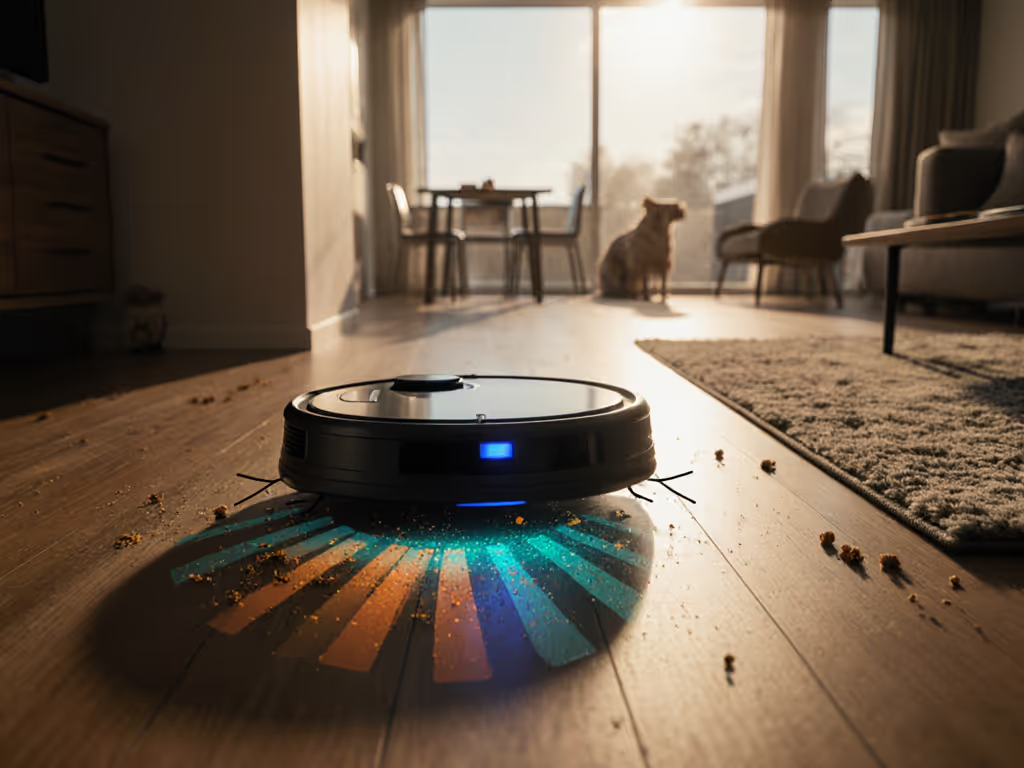
The geometry is unforgiving. A circular robot approaching a 90-degree corner head-on can't compress into the angle. Without explicit corner-sensing and adaptive brush placement, debris accumulates in these blind spots: fine dust in kitchen grout lines, pet hair in bathroom corners, crumbs along living-room baseboards where foot traffic is heaviest. For busy households (especially those with pets), this gap becomes a visual reminder that automation isn't complete.
Beyond geometry sits a second issue: navigation quality. Random-path robots miss edges consistently because they have no map. They can't plan a perimeter-first approach or adjust trajectory mid-movement. Modern homes with furniture, rugs, and obstacles compound this. A robot without precise mapping will overshoot corners, bump walls inefficiently, or skip entire room sections. The result: you think the job is done, but corners and edges are left visibly dusty.
The Agitation: What This Gap Costs You
In practical terms, corner gaps create cascading maintenance. Pet owners see hair accumulation accelerate in neglected corners, and those spots become matted refuges for dust and allergens. Hard-floor homes with grout lines watch grime settle where mop pads can't reach. Visually, a clean room with dirty corners reads as half-clean. Psychologically, it negates the entire point of hands-free cleaning: you've traded one chore (full vacuuming) for another (manual corner cleanup).
The time math matters. Spot-cleaning corners by hand takes 5-10 minutes weekly. Over a year, that's 4-8 hours you don't get back. For renters and homeowners stretched across work, family, and pet care, that recovery time is real currency. Yet many mid-range robots marketed as "complete" solutions still leave you reaching for a handheld vacuum. The quieter the main unit, the more conspicuous the trade-off becomes, and you've achieved a calm home except for your own manual labor breaking the silence.
Noise compounds this. A robot that runs during naps or calls but can't reach edges forces you to override your own quiet-hours schedule to finish what it started. If quiet operation is critical, see our low-noise robot vacuums with real decibel tests. That defeats the entire premise of a routine-friendly robot. Quiet floors beat clever features when naps and meetings collide, unless those features actually deliver on the promise.
The Solution: Modern Edge Cleaning Technology at Work
Today's leading robots address the corner problem through three converging technologies: adaptive navigation, intelligent brush design, and targeted cleaning modes.
Advanced Navigation Finds Corners First
LiDAR-based navigation (laser-driven mapping) is the foundation. Unlike bump-and-go random pathing, LiDAR creates a precise room map before cleaning begins. Modern robots combine LiDAR with AI-powered object recognition, allowing them to identify walls, furniture edges, and corners with centimeter-level accuracy. Precision pathing means the robot approaches a corner at the optimal angle rather than overshooting or skipping it entirely.
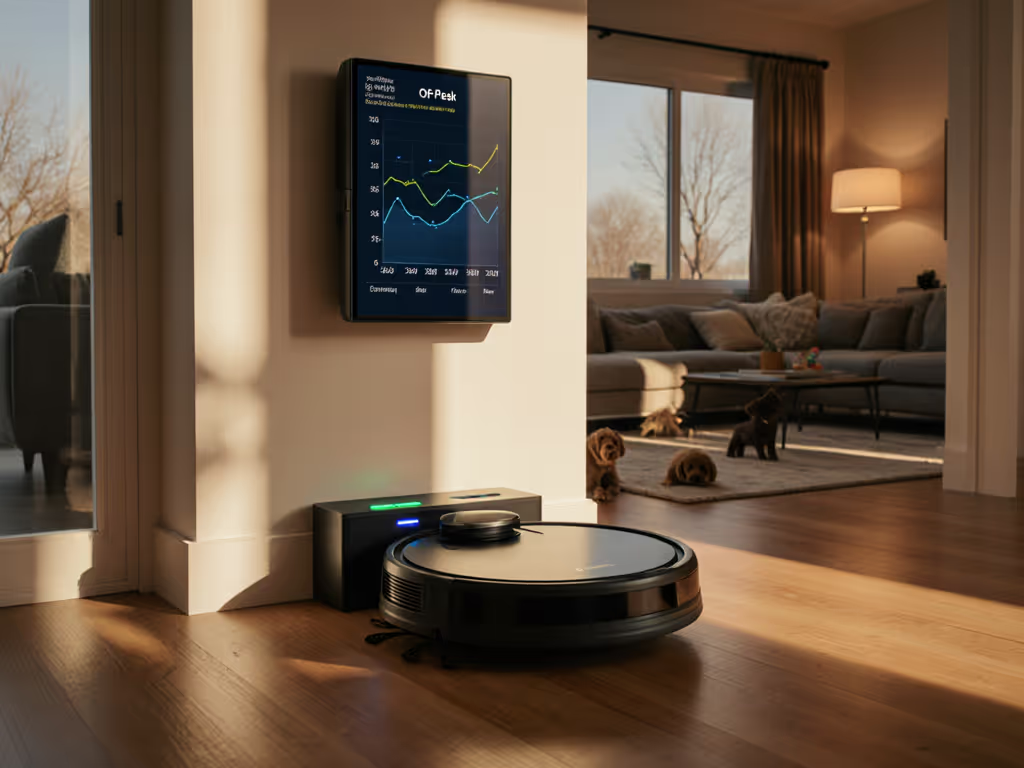
A practical check: open your robot's app and examine the map it generates. For step-by-step mapping tips and zone setup, see our robot vacuum app guide. Corners should appear sharp and defined, not blurry or missing. If they're blurry, the robot's navigation is the bottleneck, and no brush upgrade will compensate.
Side Brush and Extendable Mop Design
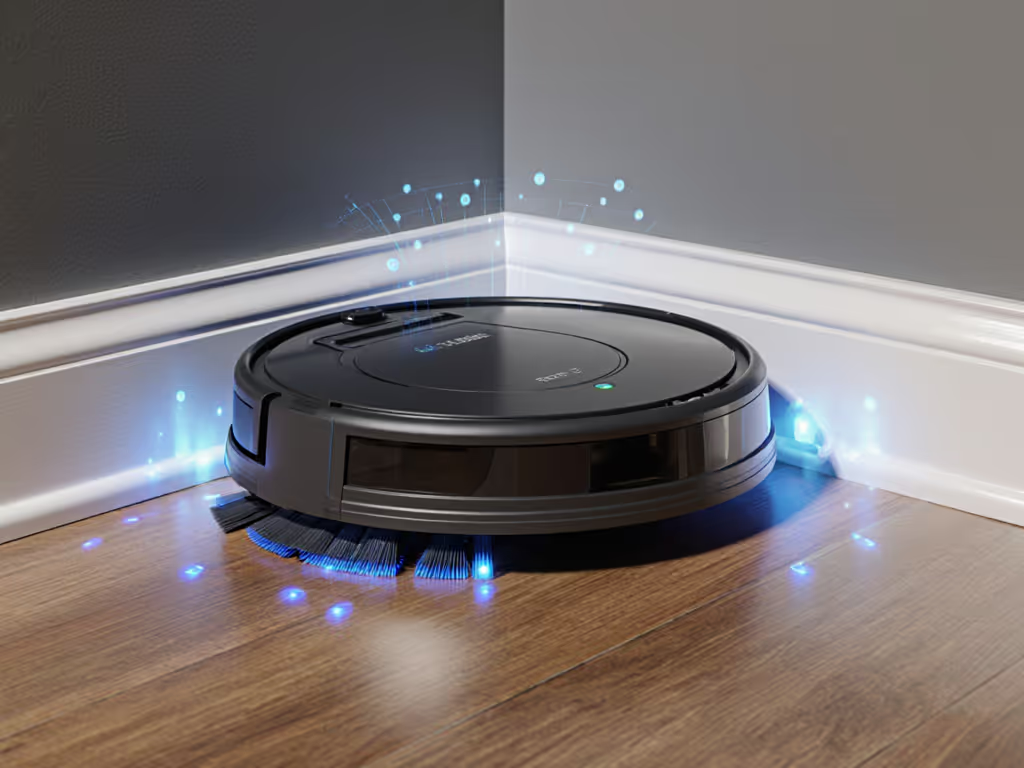
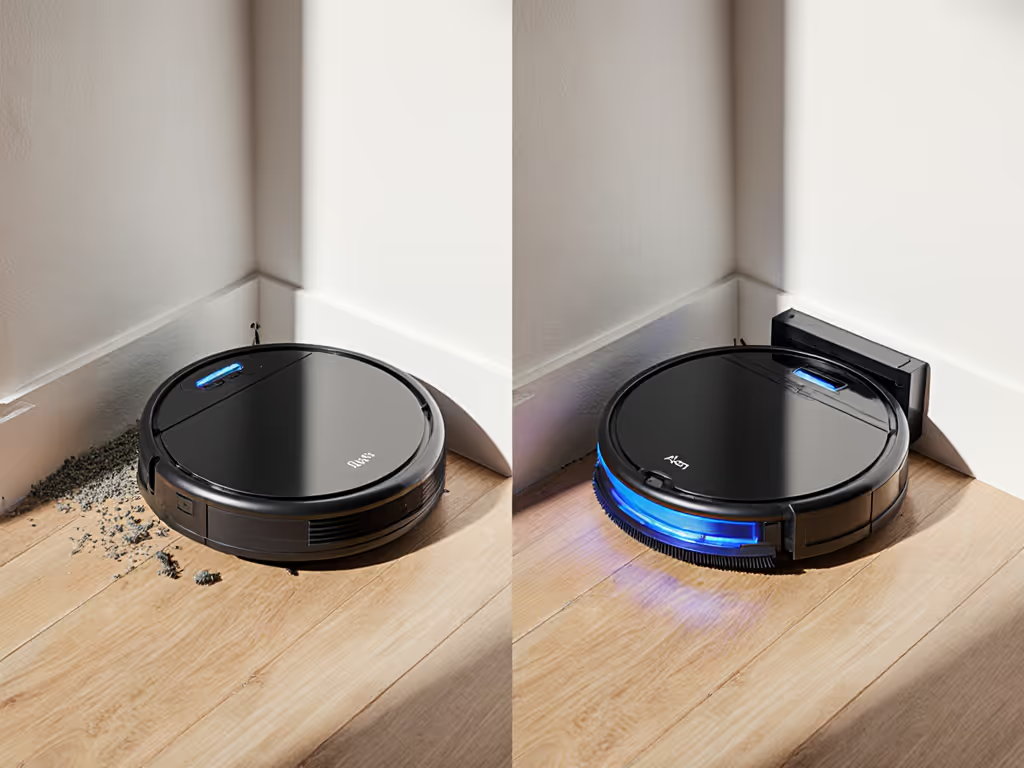
The engineering here is scenario-specific. A spinning side brush sweeps debris toward the central suction path. But standard side brushes sit flush with the robot's body, leaving a small gap between brush and baseboard. Modern designs solve this through extension: the brush sits low on the chassis and extends just past the robot's edge, ensuring actual contact with the baseboard rather than spinning in empty space.
For mopping, an extendable arm (sometimes called a "mop-extend" or "flexi-arm" system) deploys a mop pad several centimeters outward, pressing it against walls and into corners. The arm activates only when the robot detects proximity to an edge, preventing snags on furniture or rugs. Some models dynamically adjust brush speed automatically: slower near walls to reduce scatter and noise, faster in open spaces. For homes where sound discipline matters (apartment dwellers, shift workers, families with young children), this speed modulation is crucial.
Targeted Cleaning Modes and Systematic Patterns
Modern robots offer what older models couldn't: corner cleaning modes. These modes instruct the robot to trace the perimeter of every wall and furniture piece before filling in the center. This edge-first strategy pairs perfectly with extendable brushes and advanced navigation. It's not just a feature, it's a deliberate cleaning sequence.
Systematic pathing amplifies this benefit. Instead of random wandering, modern robots follow row-by-row patterns (like lawn mowing) or spiral routes, ensuring no spot is missed and edges receive equal attention to open areas. Combined with a perimeter-first pass, this two-stage approach guarantees comprehensive coverage.
Real-World Specifics: What to Expect
Different robot shapes handle corners differently. Square and D-shaped robots fit naturally into 90-degree angles, achieving direct edge contact. Round robots with extendable arms reach 98-100% coverage by extending brushes or mop pads outward. Some models claim proximity measurements (reaching within 0.039 inches of edges), which translates to near-complete corner debris removal in grout lines and along baseboards.
Pet hair and fine dust respond differently to corner geometry. Hair tends to accumulate in dead zones; fine dust settles across grout lines. Models combining high suction power (16,000+ Pa) with precision pathing remove large debris and fine particles more effectively in corners. Advanced models include anti-tangle brush designs (triple V-shaped bristles) that resist hair wrap in corners where tangles typically initiate.
The Noise and Privacy Layer
Edge-cleaning capability shouldn't come at the cost of routine disruption. A robot running at 70+ decibels during edge passes negates the calm-home premise. Modern designs optimize airflow to reduce tone harshness. Industry-specific aerodynamic housings and efficient motor architecture mean higher suction doesn't automatically mean louder operation. This is worth investigating: ask manufacturers for decibel measurements across suction levels and during edge mode specifically. A robot that whisper passes through your home's perimeter is one you won't mind scheduling during breakfast or a short call.
Data privacy during mapping is another consideration. Some robots map locally and store maps on-device; others push maps to the cloud. Learn what each brand collects and how to lock it down in our robot vacuum data security guide. For homes where privacy matters (renters hesitant to share floor layouts, families conscious of data handling), clarify whether corner-detection and edge-mode operation require cloud connectivity. A robot that maps offline, stores maps locally, and allows edge-cleaning without cloud dependence respects your home more thoroughly.
Evaluating Corner Performance for Your Home
When assessing a robot vacuum cleaner, ask these questions specific to your layout:
- Geometry: Are your corners 90 degrees, or do you have L-shaped rooms, alcoves, and recessed edges? D-shaped robots handle recessed edges better; round robots with extendable arms adapt to both.
- Floor mix: Tiles, hardwood, and grout lines? Pet hair on rugs? The combination affects how debris accumulates in corners. High-suction models with anti-tangle brushes perform better on mixed floors.
- Baseline noise: Test the robot's edge mode in your home during quiet hours (naps, calls). A spec sheet saying 65 dB doesn't capture how tone sounds during a morning meeting or afternoon rest.
- Navigation transparency: Pull up the app and request a room map. Ask the retailer to show you a map of a space with multiple corners. Blurry corners indicate mapping gaps.
- Maintenance clarity: How often will you clean the side brush and corner areas? Extendable brushes sometimes need manual attention to prevent hair wrap. Some models self-clean; others don't. This ongoing effort factors into time savings. For upkeep checklists and error-code fixes, use our robot vacuum maintenance guide.
Why This Matters: Routine and Calm
The goal of a home robot isn't just cleanliness; it is the integration of cleaning into a routine that supports naps, calls, and family moments without notice. A robot that cleans corners genuinely means you don't have to. It means the edges are handled, the small but visible gaps are filled, and the calm routine you've built stays uninterrupted. That's the difference between a gadget on your floor and a quiet teammate in your home.
What to Explore Next
If corner cleaning is your priority, spend time with product maps in retailers' apps and read decibel specifications alongside suction power, because they're paired traits, not independent. Investigate whether extendable brushes or mop arms are user-serviceable, because hair wrap is common in corners and you'll want to clean it easily. Ask whether edge-mode runs quieter than standard mode, and if local mapping is supported (so corner detection doesn't depend on cloud uptime). Finally, check owner forums for real homes (not product photos) to see how different corner shapes and floor types perform after 6-12 months of use. That lived evidence will guide you better than any specification.
Related Articles