AI Dirt Pattern Recognition: How Robots Learn to Clean Smarter
By Aisha Noor • 10th May
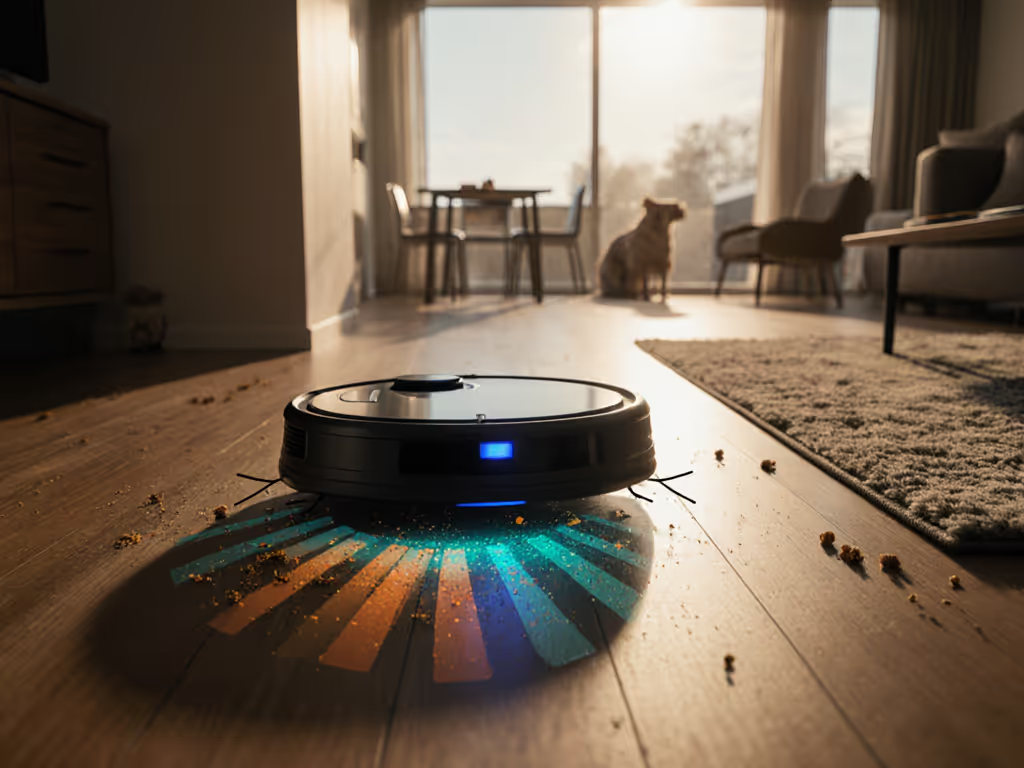
Understanding the Problem
When you bring home a robot vacuum, the marketing pitch is seductive: set it and forget it. Press a button and your floors stay perpetually clean without effort. But after two weeks, you're still crawling under furniture to free it from a chair leg, or you're bleaching the brush because it's clogged with hair again. The promise of passive cleaning has become an obligation you didn't anticipate.
This gap between promise and reality comes down to AI dirt pattern recognition and robot vacuum intelligence (or rather, the lack thereof in machines that clean on a fixed schedule without understanding your home's actual demands). Traditional robots follow predetermined paths or random routes, treating a sunlit hardwood kitchen floor the same as a dark bedroom rug where pet hair nests. To understand how floor type changes cleaning behavior, see our mixed-surface cleaning guide. They don't learn. They don't adapt. They don't recognize that Tuesday is when your partner works from home and silence matters, or that the mudroom needs extra attention on rainy days.
The core issue isn't vacuum power. It's that most robots operate blind to the patterns that define your home's cleanliness needs.
Agitating the Reality: Why Standard Approaches Fall Short
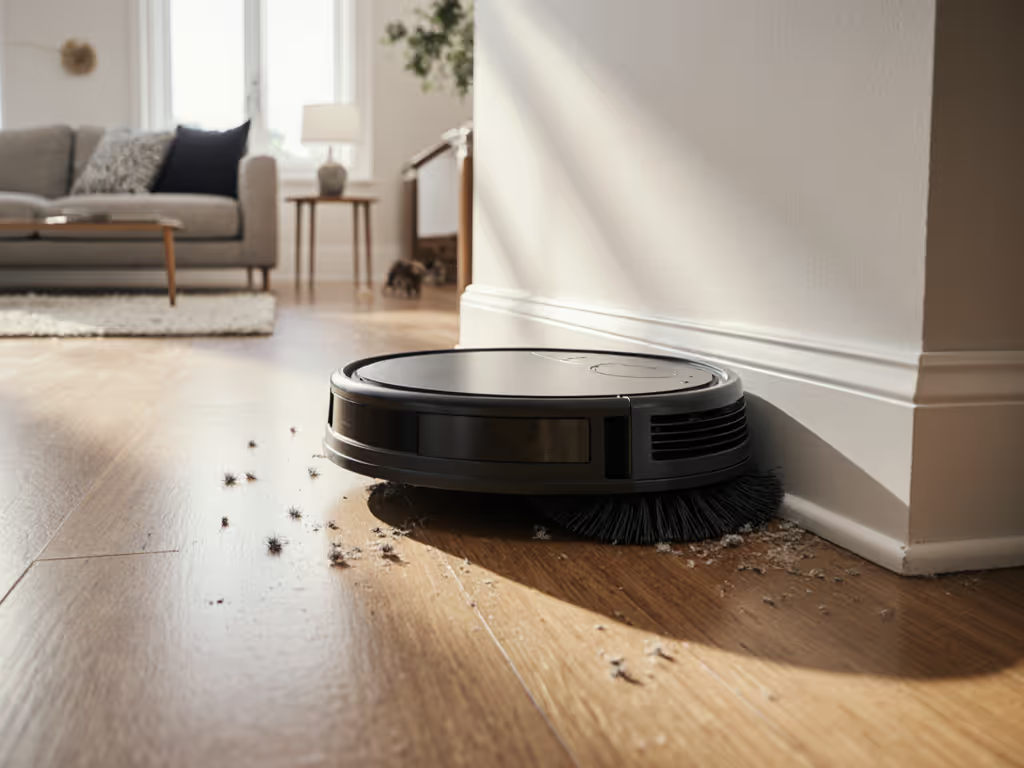
Consider a week in a house with pets, remote work, and mixed floors. Your robot runs at a set time, pushes debris around the hallway rug, misses 40% of the pet hair in high-traffic zones, and startles your cat every other day. You adjust the schedule. It now runs at midnight, but the map forgets your bedroom layout after a firmware update, and you spend an hour re-teaching it room names. Meanwhile, the dustbin fills twice as fast as advertised because it isn't prioritizing high-debris areas, it's just moving forward.
In testing across compact spaces where naps and video calls overlap tight windows, I logged decibel peaks room by room and noted where navigation became inefficient. Robots without pattern intelligence were consistently louder during tight turns (brush motors straining against resistance they didn't anticipate) and missed the corners where hair accumulated most. The ones that didn't understand which floors shed the most were running identical cycles over hard tile as over medium-pile carpet. It's wasteful motion, wasted battery, and wasted time that negates the time savings you were promised.
The deeper frustration emerges from cleaning strategy optimization taken for granted. Most users assume their robot will:
- Spend more time in high-traffic, high-debris zones
- Detect and avoid non-debris obstacles (cords, socks, pet waste)
- Recognize that a hallway with dark rugs needs different brush pressure than light tile
- Understand that a bedroom during work hours should be quiet-mode only
- Adjust its route based on actual dirt distribution, not guesswork
None of this happens in standard robots. The result: babysitting, frequent manual rescues, and a mental load that negates any time savings. The time you gain back is an illusion.
Quiet floors beat clever features when naps and meetings collide.
Yet most marketing focuses on suction power or app features, the flashy not the fundamental.
The Solution: How AI Dirt Pattern Recognition Changes the Game
Modern debris classification AI systems work by combining multiple data streams: real-time sensor data (bump detection, cliff sensors, brush motor current, LIDAR returns), historical cleaning maps, and environmental context. Here's how it translates to a smarter, calmer home:
Building a Cleaning Intelligence Map
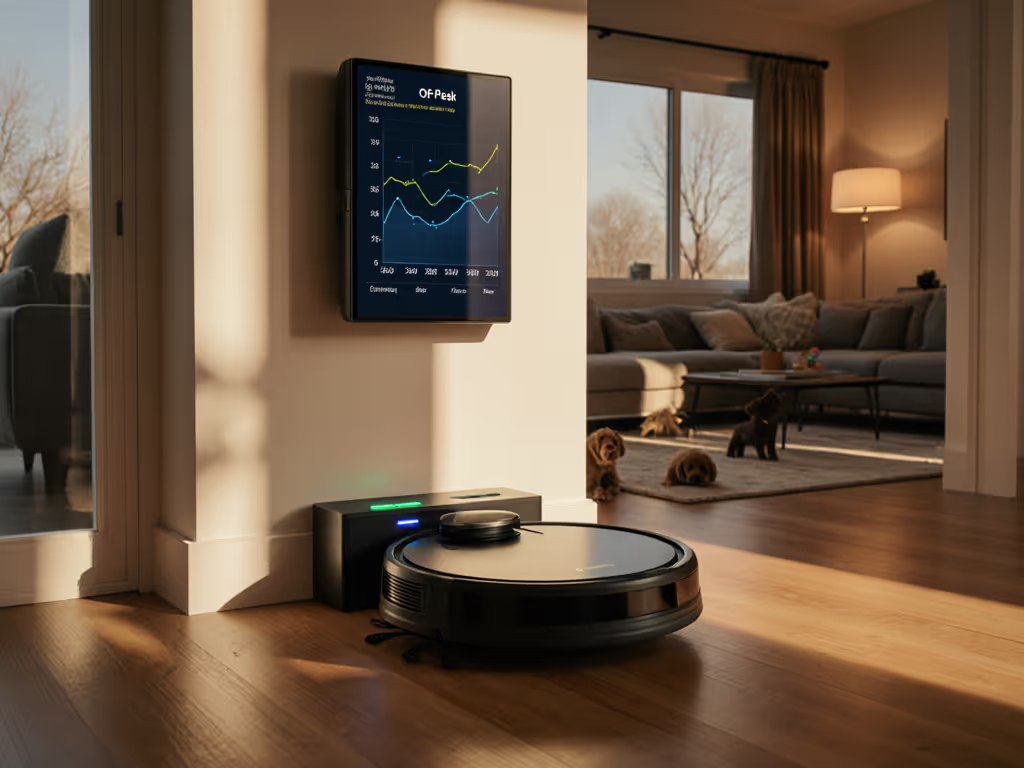
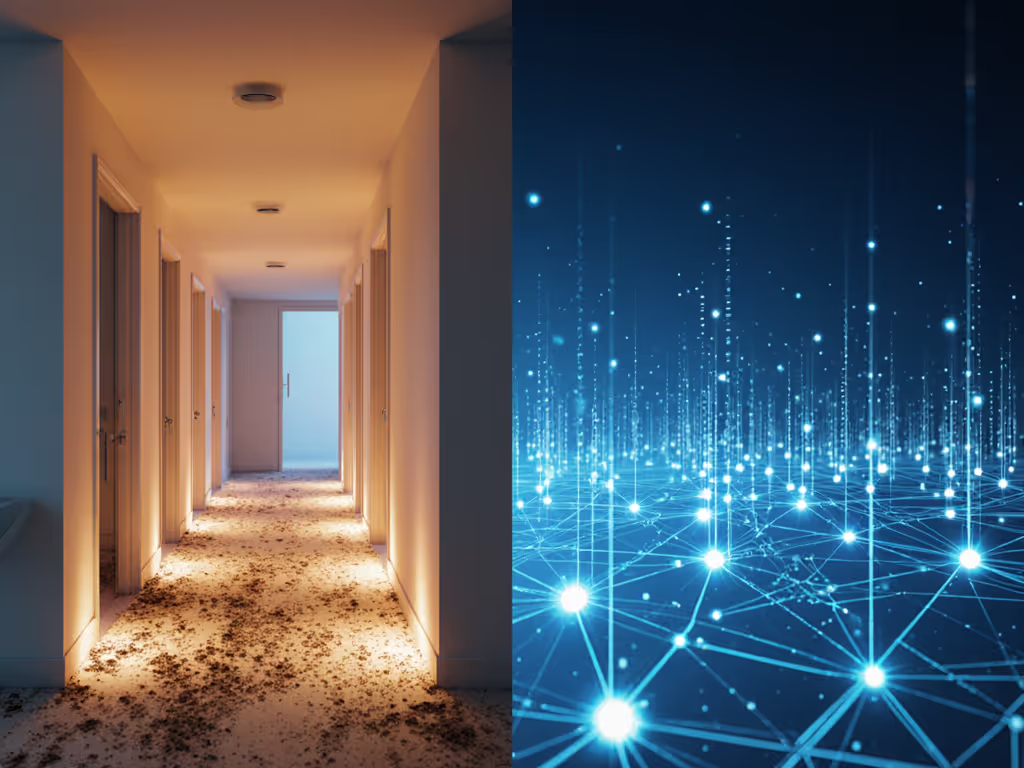
Advanced robots now employ dirt mapping technology that doesn't just remember your floor plan, it remembers where dirt actually lives. After the first three to five cleaning cycles, the robot's algorithm begins to correlate:
- High-traffic zones with increased debris density
- Carpet areas with sustained brush motor load (a reliable marker of hair density and fiber type)
- Room transitions where debris concentration spikes predictably
- Time-of-day patterns (post-meal kitchen spikes versus late-night hallway tracking)
This data feeds into smart cleaning algorithms that reprioritize routes dynamically. Instead of a uniform grid pass, the robot allocates cleaning cycles based on measured need. A bedroom visited 40% more frequently by inhabitants gets proportionally more attention. A mudroom after rain gets flagged for heavier coverage without user intervention. Pet owners see their living room rug cleaned twice while tile floors receive a single pass, because the system learned where loose hair actually settles.
Real-World Translation: Quiet, Adaptive Schedules
The practical benefit becomes clear in noise-sensitive environments. If low dB matters in your home office or nursery, our tests of quiet robot vacuums with measured decibels can help you pick the right model. A robot with true pattern recognition detects which rooms are actively in use (through noise-floor analysis or historical occupancy data) and adjusts both route and output decibel level accordingly. If it learns that Wednesdays run heavy on video calls, it flags that day for quiet-mode operation or defers deep cleaning to evening hours when silence isn't critical. If it detects that a hallway near a bedroom accumulates tracked-in debris overnight, it schedules an early-morning micro-pass at lower decibel output rather than a full-power afternoon run.
This is not guesswork; it's privacy-first defaults applied to cleaning routines. The robot learns your patterns without uploading a detailed motion map to the cloud. Learn how to lock that down in our robot vacuum data security guide. Offline processing keeps noise detection and route optimization local, not cloud-dependent. When you set a room to avoid during work hours, it's a learned boundary reinforced by the system, not a daily manual override you need to remember.
Addressing Pet Owners and Mixed-Floor Homes
For households with pets, pattern recognition becomes decisive. A robot that learns pet shedding density (recognizing that your dog sheds three times more in spring, and that the living room rug traps 80% of loose hair while hardwood floors stay relatively clean) allocates intensity accordingly. It won't waste battery running an aggressive pass over tile identical to carpet coverage. It detects when the brush motor works harder (indicating dense hair or debris buildup) and adjusts approach, reducing wear and extending brush life.
Pet waste avoidance also improves through pattern recognition. A robot that learns the layout and typical accident locations (near pet beds, water bowls, outdoor entry points) flags those zones for object-detection priority. It's not infallible, but it represents a vast improvement over treating every square meter identically.
The Navigation Precision Advantage
One of the most frustrating failures of traditional robots is navigation drift. After weeks of use, maps degrade, rooms shift on the layout, and dock placement gets forgotten. Dirt mapping technology reinforces map stability by grounding navigation in actual cleaning feedback. If the robot successfully cleaned corner X six times, its model of that corner becomes more confident. If it regularly encounters friction near the bookshelf, it learns the exact boundary and adjusts approach angle automatically.
The result is fewer map resets, fewer manual interventions, and fewer scenarios where a firmware update erases your carefully labeled rooms.
What This Means for Your Home
If you're managing a busy household with pets and mixed flooring, a robot with genuine pattern recognition isn't a luxury feature, it's the difference between a tool that compounds your time and one that genuinely reclaims it. The trade-off clarity matters: these systems require a short learning phase (typically three to five cleaning cycles) and a commitment to privacy-respecting data handling. They work best when offline processing is an option, not an afterthought.
The robots that vanish into your routine, that run quietly during critical hours, understand which floors need what level of attention, and adapt scheduling to your home's rhythm, are the ones worth the investment long-term. Advertised wattage fades fast; a cleaning strategy that fits your home's actual needs pays dividends for years.
Questions to Guide Your Evaluation
As you assess options, move past feature lists and ask what actually matters: Use our step-by-step robot vacuum buying guide to translate these questions into a focused short list.
- Does the robot measure and learn dirt density, adjusting time allocation per room?
- Is pattern mapping processed locally, or required to upload data to the cloud?
- Can it differentiate carpet from hard floors and adjust brush pressure automatically?
- Does quiet-mode scheduling respond to room occupancy or time windows you set?
- How stable are maps after firmware updates: are rooms re-learned or re-labeled?
- What does the app require: cloud connection only, or does it function offline?
These questions push past glossy specs into genuine fit. And fit is what determines whether a robot becomes a quiet partner in your home or another maintenance task disguised as convenience.
Related Articles