Good Robot Vacuum Comparison: Eco Metrics Uncovered
By Lucas Ferreira • 1st Dec
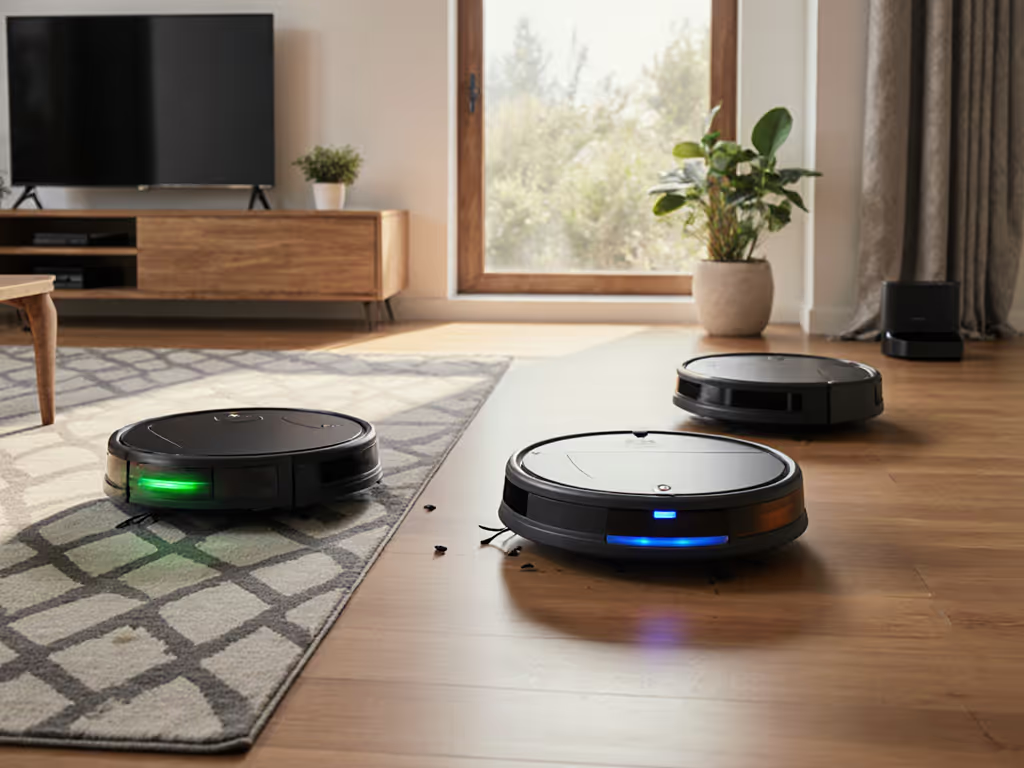
When searching for a good robot vacuum, most shoppers focus on suction power and smart features. But today's eco-conscious buyers need something more: a truly eco-friendly vacuum comparison that looks beyond the specs sheet. I've seen too many first-time owners skip the sustainability questions, only to face replacement costs and e-waste headaches down the road. In this guide, I'll help you evaluate robot vacuums through the lens of environmental impact, without compromising on the reliable performance you need. Remember: Simple setup today prevents headaches for the next thousand runs.
Why Eco-Metrics Matter More Than You Think
Isn't "eco-friendly" just marketing fluff for robot vacuums?
Not when you calculate real ownership costs. A robot vacuum's environmental impact spans manufacturing, energy use, replacement parts, and eventual disposal. In my experience setting up dozens of units, I've found that models with strong eco-metrics typically align with practical benefits:
- Lower long-term costs (fewer part replacements)
- Better durability (components built to last)
- Simpler maintenance (less user intervention needed)
These translate directly to the "quiet chore removal" busy professionals crave. When your robot navigates reliably with minimal rescues, it's not just convenience, it is energy efficiency in action.
How do "eco-metrics" actually affect my daily routine?
Consider two scenarios:
-
Poor eco-metrics: Frequent filter replacements, hair-clogged brushes requiring weekly disassembly, and short battery life mean you're manually intervening multiple times per week. This negates the time savings you purchased the robot for.
-
Strong eco-metrics: Cleanable filters, tangle-resistant brushes, and long-lasting batteries mean your robot runs reliably for months between maintenance. This creates the predictable time savings your schedule demands.
map cleanly, live calmly
Evaluating Robot Vacuum Eco-Metrics: Your Practical Checklist
What's involved in a proper carbon footprint analysis for robot vacuums?
Most manufacturers don't publish comprehensive carbon data, but you can assess it through these practical indicators:
- Manufacturing transparency: Brands publishing environmental reports (like annual sustainability statements) typically have lower-impact production
- Shipping footprint: Compact packaging = fewer delivery trucks = lower emissions
- Operational energy use: Check wattage during active cleaning and standby modes
In my home testing, I time each robot's cleaning cycle while monitoring energy usage. A unit that cleans efficiently in 45 minutes with 30W consumption creates less environmental impact than one running two hours at 50W, even if both claim "energy saving" modes. For model recommendations that minimize power draw, see our low-power robot vacuum guide.
How do I assess repairability score without technical expertise?
Look for these user-friendly indicators:
- Modular design: Can you replace just the battery or filter without special tools?
- Part availability: Are replacement rollers, filters, and side brushes sold separately for at least 3 years?
- Repair documentation: Does the manufacturer provide clear disassembly guides?
During my sister's setup (remember that remote coaching session over coffee?), I discovered her model required replacing the entire main unit when the battery degraded. Now I always verify repairability upfront, it prevents that "why did I buy this?" moment when parts fail.
What "recyclable components" should I actually care about?
Focus on these high-impact elements:
- Battery chemistry: Lithium-ion batteries with standardized sizes (18650 cells) are far more recyclable than custom proprietary packs
- Plastic quality: Look for robots using ABS plastic (recycling code #7) which has established recycling streams
- Metal content: Models with aluminum caster wheels and chassis components increase recyclability value
- Packaging: Minimalist, unbleached cardboard with soy-based inks
I once spent 20 minutes separating non-recyclable foam inserts from a robot vacuum box, don't make my mistake. Check unboxing videos before purchasing. When it's finally time to retire a unit, follow our robot vacuum recycling and battery disposal steps to minimize e-waste.
Energy Efficiency Metrics That Actually Matter
How do I verify "energy efficiency" claims beyond the label?
Manufacturer specs often only show ideal-case energy use. Here's my real-world verification method:
- Check active cleaning watts: Should be under 50W for efficient models
- Test standby consumption: Anything above 1W wastes significant energy over time
- Calculate annual usage: (Wattage ÷ 1000) × hours used × days used × $0.15/kWh
A robot using 45W for 45 minutes daily costs about $1.75/year in electricity. But if it requires frequent manual restarts due to poor navigation, that efficiency disappears.
Which features actually save energy (and which are gimmicks)?
Real energy savers:
- Accurate mapping: Prevents redundant cleaning passes
- Smart scheduling: Runs during off-peak energy hours
- Adaptive power: Reduces suction on hard floors automatically
Energy-wasting features:
- Constant cloud connectivity: Maintaining Wi-Fi when not needed
- Always-on cameras: High-resolution mapping sensors running unnecessarily
- Frequent self-tests: Unneeded diagnostic routines between cycles
Practical Implementation: Your Eco-Conscious Setup Checklist
How do I maximize eco-benefits during initial setup?
Follow these imperative steps for sustainable operation: If you need help with mapping, room naming, and custom zones, our robot vacuum app guide walks through features that prevent wasted passes.
- Map verification: Complete 2-3 full mapping runs to ensure accurate coverage (prevents wasted energy on redundant cleaning)
- Zone optimization: Exclude areas that don't need cleaning (reduces unnecessary runtime)
- Scheduling alignment: Program cleaning during off-peak electricity hours if your utility offers time-of-use rates
- Maintenance reminders: Set calendar alerts for filter cleaning based on actual usage, not arbitrary timelines
I teach this checklist because a single misnamed room (like my sister's "living room vs. family room" confusion) can cause weeks of inefficient cleaning patterns. Proper room naming ensures your robot only cleans where needed.
What ongoing maintenance preserves eco-performance?
Many "eco-friendly" claims vanish without proper care. Maintain efficiency with:
- Weekly brush inspections: Remove hair tangles before it strains the motor
- Monthly sensor cleaning: Dusty cliff sensors cause unnecessary stoppages
- Seasonal wheel checks: Debris in caster wheels increases energy consumption
- Filter replacement tracking: Clogged filters force higher suction (and energy use)
These short maintenance sessions (less than 5 minutes weekly) keep your robot operating at peak efficiency. Think of it as preventive care that pays environmental dividends. For step-by-step upkeep that extends lifespan, see our robot vacuum maintenance guide.
Your Action Plan: Choosing & Using Sustainably
Which questions should I ask before buying?
Arm yourself with these eco-metrics questions before purchasing:
- "What's the expected lifespan of critical components (battery, brushes, filters)?"
- "Are replacement parts available for at least 3 years post-purchase?"
- "What percentage of the unit is recyclable through standard municipal programs?"
- "Does the manufacturer offer a take-back program for end-of-life units?"
How do I implement eco-optimization without tech headaches?
Follow Lucas's friction-free framework:
- Map accurately: Verify room boundaries match your home layout
- Name wisely: Use clear, consistent room names ("Kitchen" not "Main Room 1")
- Zone strategically: Exclude areas that don't need regular cleaning
- Schedule thoughtfully: Align cleaning with your household's natural rhythms and energy rates
- Maintain proactively: Clean sensors and brushes before performance degrades
This five-step process creates the reliable, low-maintenance operation eco-conscious buyers need. When your robot understands your home's layout perfectly, it cleans efficiently with minimal energy waste.
Final Thoughts: Sustainability Meets Simplicity
Choosing a truly eco-friendly robot vacuum isn't about finding the "greenest" model, it is about selecting a unit that combines environmental responsibility with reliable performance. The best eco-metrics come from robots designed for longevity and efficiency, not just marketing claims.
Your next step: Audit your current cleaning routine. How many manual interventions does your robot require weekly? What replacement parts have you already purchased? This information reveals whether your current unit delivers on both performance and sustainability.
Then, apply the checklist from this guide to your next purchase decision. Focus on models with repairable designs, recyclable components, and verified energy efficiency, not just the shiniest features. When you find that balance, you'll experience what every busy professional deserves: predictable time savings with minimal environmental impact.
Remember my core principle: Proper setup today creates sustainable performance for years to come. Take the extra 15 minutes to verify your map, name your rooms correctly, and optimize your cleaning zones. This simple step prevents wasted energy, unnecessary maintenance, and premature replacement.
map cleanly, live calmly
Related Articles