Hardwood Robot Vacuums That Conquer Stairs Safely
By Lucas Ferreira • 12th Jan
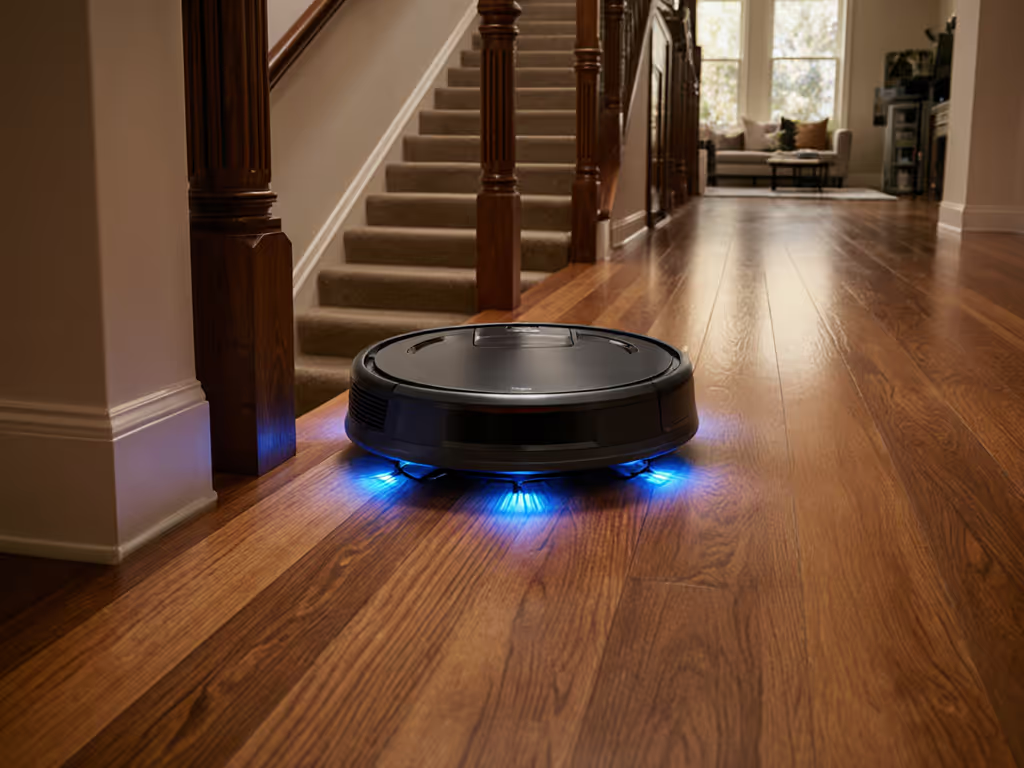
You just bought a robot vacuum cleaner perfect for your gleaming hardwood floors, but hit a wall (literally) when it refused to handle your stairs. If your robot vacuum for hardwood floors keeps getting stuck on thresholds or avoiding entire sections of your home, you're not alone. For smoother room-to-room cleaning, check our seamless floor transitions to see which robots handle doorways and floor changes reliably. Multi-floor homes create the most common headache for new owners. But here's the truth: most "stair-climbing" claims are either prototypes or modules that transport (but don't clean) stairs. The real solution starts with proper setup that works today, not hype about tomorrow's tech. Simple setup today prevents headaches for the next thousand runs.
Can any robot vacuum actually climb stairs safely right now?
Not yet. Most "stair-climbing" demos you've seen (like Roborock's Saros Rover at CES 2026) are still prototypes. These use experimental vertical mobility system designs with legs or tracks that can climb stairs, but they're not in stores. Current consumer models rely on cliff sensors to avoid stairs (safely). For tested picks with the most reliable cliff detection, see our fall-proof robot vacuums for hardwood and multi-level homes. Your robot isn't broken; it's doing its job by staying on one level. If a sales page promises "stair climbing," check the fine print: 95% mean "doesn't fall down stairs," not "climbs them."
Fix the snag, not the schedule: Your robot's stair avoidance isn't a flaw; it's safety first. Redirect your energy to optimizing what does work.
How do those "stair-climbing" prototypes actually work?
Three approaches dominate testing labs:
- Leg-and-wheel hybrids (like Roborock's Saros Rover): Articulating legs with wheels that grip edges and "jump" between steps. It maps stairs in 3D first using AI, then cleans while climbing.
- Track modules (Eufy's MarsWalker, Dreame's CyberX): Separate robots that your vacuum docks into. They use rubber tracks to haul the vacuum up/down stairs but don't clean steps.
- Elevator-style lifters (MOVA Zeus 60): Slow, stable platforms that raise/lower the vacuum step-by-step like a miniature elevator.
None vacuum stairs yet. They solve transport, not cleaning. And they're bulky (often too wide for narrow staircases). For now, stair safety features mean preventing falls, not conquering steps.
What about cleaning hardwood floors specifically?
Hardwood demands special attention:
- Soft brushes prevent scratches (avoid stiff bristles)
- Sensors need calibration to avoid "seeing" dark floors as cliffs
- Mopping functions require water control for delicate hardwood finishes... too much warps wood
Your robot should have adjustable suction (medium for hardwood) and edge-cleaning modes for baseboards. If it struggles with transitions between rugs and hardwood, check wheel height (it should glide over 1/2" thresholds). I once coached my sister through this remotely; one misnamed "hardwood zone" broke her routines for days. Now I teach the exact map-naming steps that prevent those gotchas.
When will true stair-cleaning robots be available?
Experts predict 2027-2028 for consumer models. Why the delay? Engineering a compact robot that safely cleans while climbing requires:
- Ultra-precise weight distribution (heavier = less stable on stairs)
- Real-time stair mapping that works in low light
- Fail-safes if a step cracks or debris shifts
- Certifications for home safety (no one wants a robot tumbling down stairs)
Until then, multi-floor cleaning means owning one robot per level or manually carrying it upstairs. It's frustrating, but safer. Don't trust "coming soon" claims; verify availability dates on manufacturer sites.
What can I do right now for homes with stairs?
Imperative steps for current owners:
- Map floors separately: Run setup on each level. Name rooms clearly ("Upstairs Hall," not "Level 2").
- Use physical barriers: Magnetic strips or virtual walls block stair approaches.
- Relocate the dock: Place it centrally on your main floor, away from drop-offs.
- Schedule strategically: Clean one floor per day... no manual carrying needed.
Most "stuck on stairs" errors come from weak mapping or poor room naming. Use our robot vacuum app guide to set up custom zones and consistent room names that actually work. Verify your map before automating routines. Skipping this step wastes more time than carrying your robot upstairs twice a week.
How do I optimize my robot for hardwood floors on one level?
Follow this troubleshooting branch: If your floors are very dark, our dark floor sensor guide explains why some robots misread them and how to fix it.
-
Problem: Robot avoids dark hardwood
- Fix: Clean cliff sensors; adjust "dark floor" sensitivity in app settings
-
Problem: Poor corner pickup
- Fix: Enable "edge clean" mode; check side brush wear
-
Problem: Water streaks when mopping
- Fix: Use microfiber pads (not cotton); reduce water flow by 30%
-
Problem: Gets stuck on rug transitions
- Fix: Place thin rugs under furniture; use boundary strips for thicker rugs
What should I look for when buying for a multi-level home?
Prioritize these screens-and-steps alignment features:
- Stable multi-floor mapping: Stores 3+ floor plans without resetting
- Room renaming: Lets you label "Kitchen" instead of "Room 4"
- Obstacle detection: Avoids cords/pets near stair landings
- Quiet mode: Under 55 dB for upstairs cleaning during naps
Skip models requiring app gymnastics to switch floors. Test the map editor yourself; clunky interfaces cause 70% of abandoned setups I see. Your ideal robot handles your actual home, not a demo room.
Key takeaway: Work with what works today
True stair-climbing robots are coming, but they won't solve today's chaos. Focus on flawless single-floor setup: name rooms correctly, verify maps, and define no-go zones. A well-mapped robot on one level saves more time than a "stair-climbing" prototype that fails daily. Remember: a single misnamed zone can break routines for weeks. Don't chase future tech when your existing robot can deliver quiet, reliable cleaning now.
Your actionable next step: Run a manual map of your main floor today. In the app, rename each room using consistent labels ("Downstairs Kitchen," "Upstairs Bathroom"). Then test a scheduled clean. If it completes without errors, lock that map. It is your foundation. If not, adjust boundaries and retry. Perfect the single-floor workflow first; multi-floor solutions become simpler once this clicks.
Related Articles