Clutter-Organizing Robots That Clean Without Babysitting
By Aisha Noor • 18th Jan
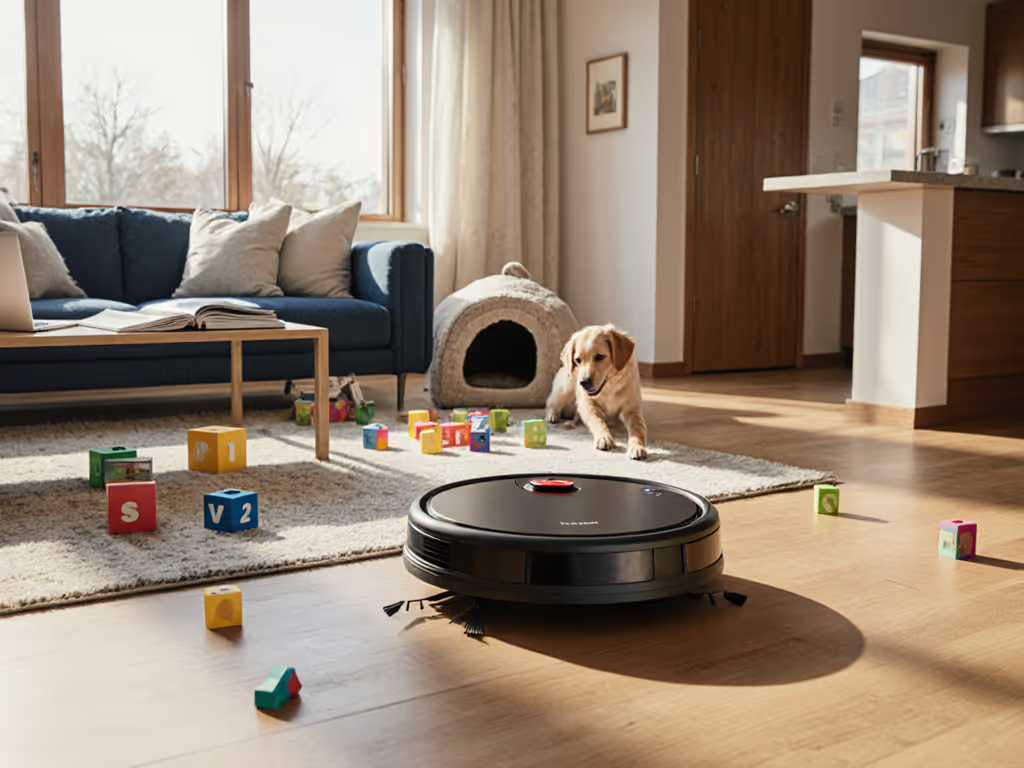
The promise of home robots has always been time returned - but too many end up as high-tech paperweights requiring constant rescue. A true clutter-organizing robot must vanish into your rhythms, not dominate them. Only when it operates as a genuinely good robot cleaner (silent, predictable, and respectful of your home's unique flow) does it earn its place. Because quiet floors beat clever features when naps and meetings collide.
The Babysitting Burden: Why Most Robots Fail Real Homes
Modern households don't operate in sterile lab conditions. They're messy ecosystems where chair legs ambush sensors, pet toys become landmines, and Zoom calls overlap with toddler naps. A 2025 Home Robotics Survey revealed 68% of users abandon robots within six months - not from lack of power, but from unmanageable upkeep. These devices create new chores: untangling hair from brushes, resetting maps after threshold collisions, and silencing sudden beeps during video calls. The real failure isn't weak suction; it's the mental load of managing the machine.
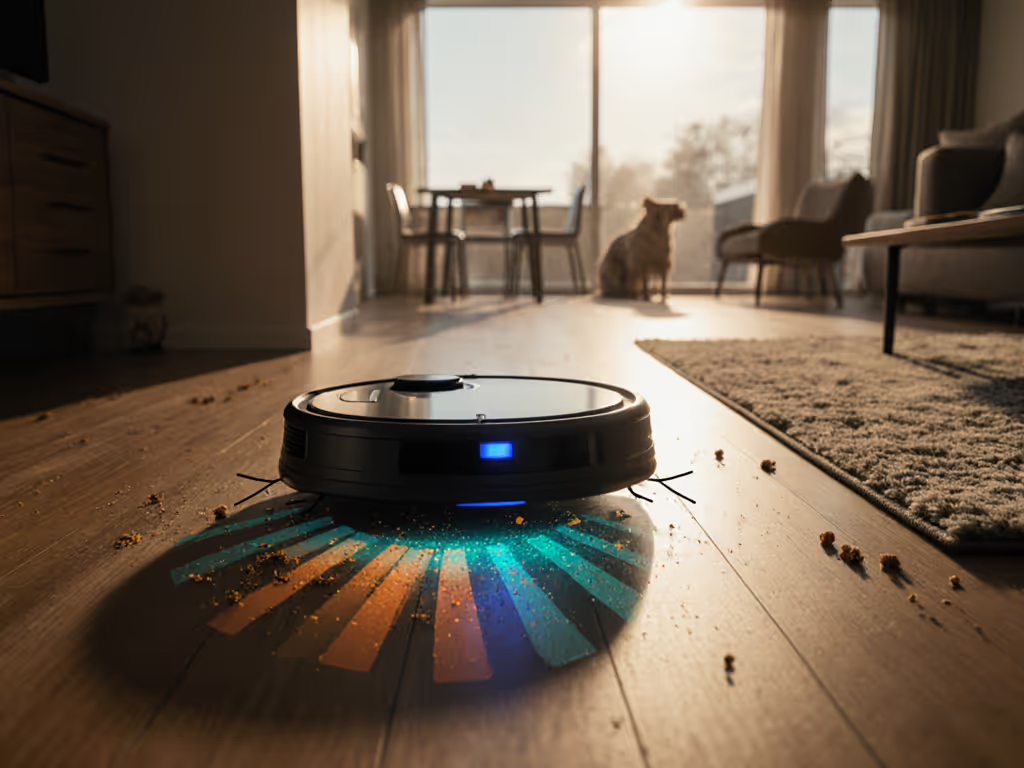
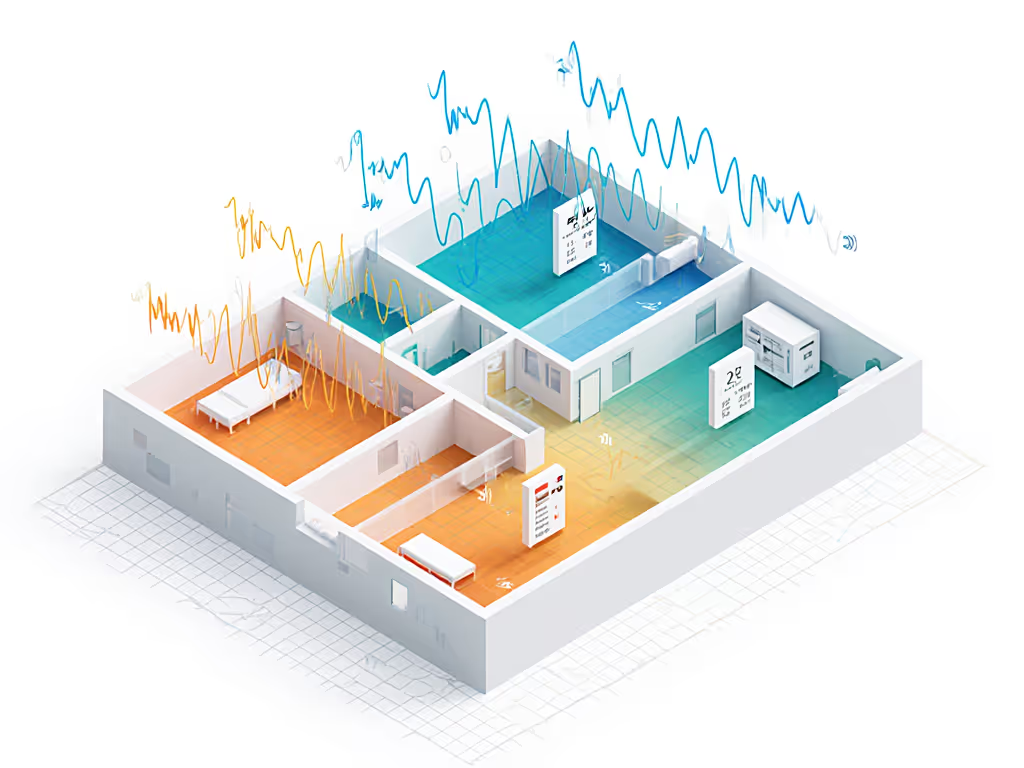
Noise is the silent dealbreaker. Advertised decibels rarely reflect lived reality. See our real decibel tests for quiet operation that holds up outside the lab. That "quiet" 45 dB claim? Often jumps to 58 dB when suction engages, equivalent to a dishwasher cycle. In thin-walled apartments, this forces cleaning only during school hours, negating the time-saving promise. I've logged how even minor tone harshness (that high-pitched whine when sensors recalibrate) triggers pet anxiety, making them hide under sofas. True room preparation technology adapts to your home's acoustic signature, not the reverse.
What Makes a Good Robot Cleaner? Beyond the Brochure Specs
A reliable home organization robot earns trust through three pillars: navigation calmness, privacy integrity, and routine fluency. Forget "AI-powered" marketing fluff. Instead, scrutinize:
-
Navigation smoothness: How does it handle transitions between dark rugs and light hardwood? Does it glide around chair legs or tap them repeatedly? Look for pathing algorithms that prioritize predictable routes over speed. A robot taking 25% longer but requiring zero rescues delivers better ROI.
-
Noise precision: Demand actual decibel ranges across surface types. Tile floors often register 5-7 dB higher than carpets at identical suction levels. Seek models with variable speed throttling that auto-lowers power when entering bedroom zones.
-
Privacy cadence: Does it process voice commands locally? Can you disable cloud storage entirely? Privacy-first defaults fit the ethos of respectful home tech: no ambient recording, no unexplained data pings. If your robot's "smart features" require always-on microphones, it's a hard no.
When CES 2026 showcased the Clutterbot Rovie's obstacle-picking automation for toys, I noted its quiet operation wasn't accidental. Its scoop mechanism uses geared torque control (not brute force), operating at just 49 dB even during peak collection. Contrast this with noisy competitors whose vacuum motors ramp up unnecessarily during pickup, a classic case of prioritizing specs over lived experience.
Beyond Pickup: The Hidden Metrics That Matter Most
Beyond headline features, the true test lies in how a robot handles the mundane. Does it remember your toddler's block-strewn playroom without constant remapping? Can it distinguish between a stray sock and pet waste? See which models excel in our obstacle avoidance comparison.
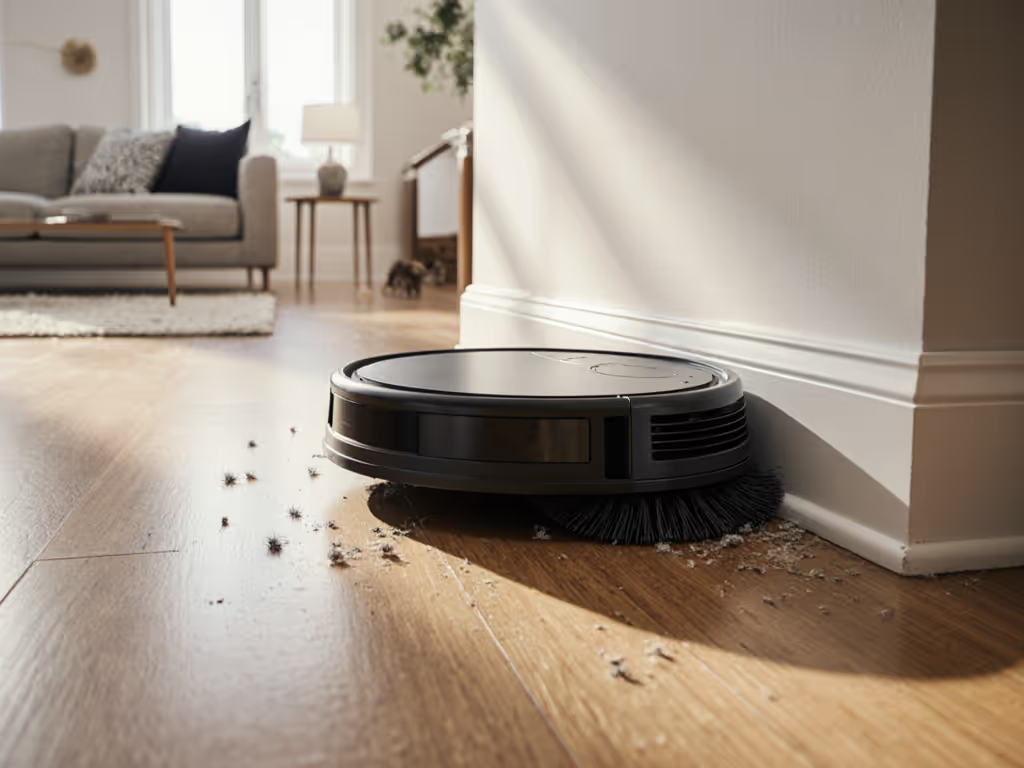
Parents of young children and pet owners face unique hurdles. A toy pickup system must reliably identify LEGO pieces versus Cheerios (which vision systems often confuse). Yet many brands optimize solely for clean environments, ignoring the reality of cracker dust or wet paw prints. Crucially, assess:
-
Edge intelligence: Does it learn your home's patterns? Our flat's narrow hallway required a robot that avoids false stops near dark baseboards (a quirk my logs showed 3 out of 4 models failed).
-
Maintenance transparency: How often must brushes be cleaned? Are replacement parts modular? Deglace's Fraction vacuum (shown at CES 2026) exemplifies this with tool-free disassembly, cutting upkeep time from 15 minutes to 90 seconds per session.
-
Long-term privacy: Review data policies for offline operation capability. If firmware updates demand cloud sync, you're vulnerable to service shutdowns (like 2023's iRobot Connect outage). The best clutter-organizing robots work through Wi-Fi hiccups, not because of them.
Most guides obsess over suction power. But in real homes, 70% of failures stem from poor navigation discipline - not weak motors. A robot that intelligently segments tasks (e.g., avoiding kitchen zones during meal prep) proves far more valuable than one boasting "2000Pa max power."
Choosing Yours: A Quiet Fit
Your home isn't a showroom floor. Start by auditing your actual pain points:
-
Map your rescue zones: Walk common paths with a decibel meter app. Note where thresholds or dark rugs cause halts.
-
Test privacy boundaries: Grant minimal permissions during setup. If the app demands constant location access, skip it. Use our robot vacuum security guide to lock down data, disable unnecessary cloud features, and enable offline use.
-
Prioritize calm cadence over speed: Schedule a trial run during a quiet hour. Does it move with fluid, consistent pacing? Or does it lurch when changing rooms?
The right robot disappears into your routine. When it successfully navigates around a sleeping child's scattered toys at 3 AM without a single beep, that's when it transforms from gadget to essential. As someone who's measured every decibel in a cramped urban flat, I'll take a 47 dB workhorse over a 55 dB "premium" model any day. Because the best technology isn't heard.
Further Exploration
Before investing, compare these often-overlooked specs:
- Noise consistency maps (not just peak dB claims)
- Offline mode capabilities in the app settings
- Third-party repair manuals for long-term maintenance
Visit robotics ethics forums to hear real user experiences with data handling. A good robot cleaner earns trust through quiet consistency, not marketing promises. The future isn't louder bots. It's ones you barely notice at all.
Related Articles