Learn how to prevent white streaks and clogs in robot mops using distilled water, approved solutions, and a simple upkeep routine for hard-water homes.
Learn how to choose a scent-capable robot vacuum that actually cleans: prioritize brushes, sealing, and mapping, then compare top picks, costs, and caveats.
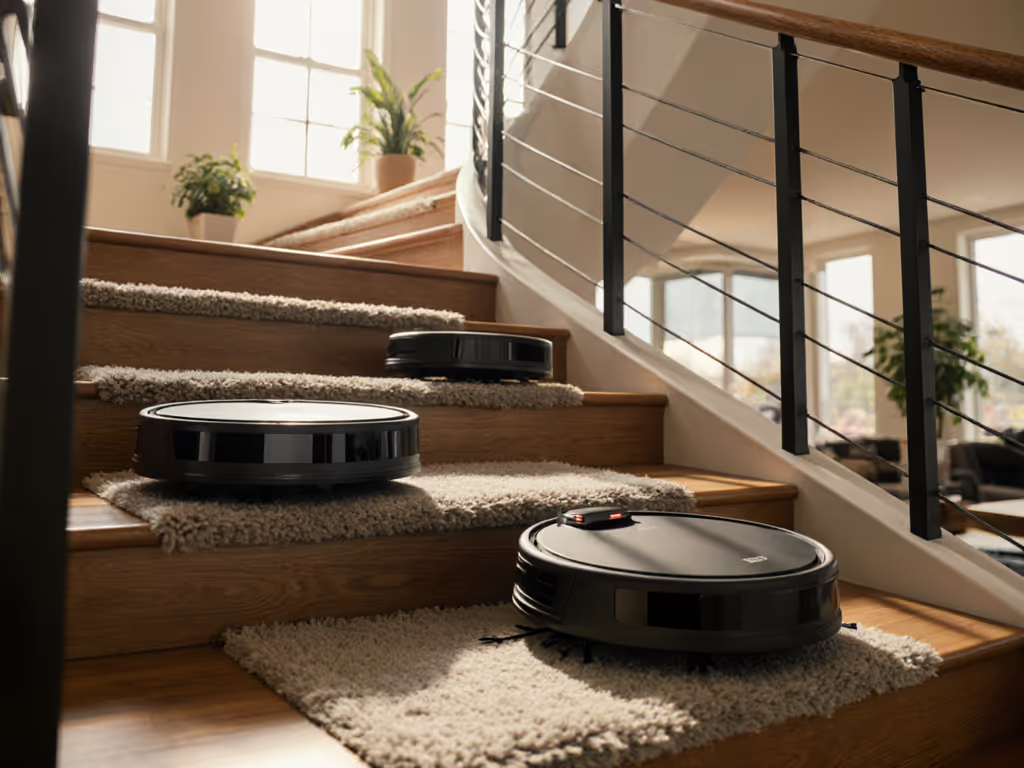
Compare Eufy, Dreame, and Mova stair carriers; learn how they move between floors, limits, and which homes fit best - cleaning still depends on the base robot.
Find a quiet, self-cleaning robot mop under $700 that fits real homes. See noise, upkeep, and navigation tests, plus the top pick for busy, pet-friendly spaces.
Learn how precise water control in robot mops protects floors and cuts 3-year costs. Compare pump types, safety features, and specs to pick the right model.
Learn which robot mop truly requires zero babysitting, based on 187 hours of real-home tests, and the metrics that actually save time in everyday layouts.
Compare robot mop systems for hardwood: understand cleaning performance, water control to avoid damage, self-maintenance reliability, and three-year costs.
Learn how to pick a robot vacuum that stays quiet, reliable, and affordable over three years - covering hidden costs, noise, warranties, and maintenance.
Prioritize predictable 3-year costs and dependable voice control over cheap specs. Learn how reliability, parts, and autonomy save seniors time and effort.
Learn the features and setup steps that make robot vacuums reliable for businesses: obstacle detection, auto-empty docks, mop lift, and a stress-tested map.
Choose a robot vacuum that safeguards home data with AES-256, TLS 1.2+, per-map keys, and local fallbacks to cut breaches and hidden costs over three years.